Mill Test Report or MTR is documentation from a testing facility that usually shows the chemical makeup and physical strength/properties of materials required to meet certain ASME and ASTM grades
Mill Test Report or MTR is documentation from a testing facility that usually shows the chemical makeup and physical strength/properties of materials required to meet certain ASME and ASTM grades
Phosphorus has four major effects on iron: increased hardness and strength, lower solidus temperature, increased fluidity, and cold shortness
The raised face flange provide a relatively large contact area. Where metal gaskets are used with this facing, the gasket area should be reduced to increase the gasket compression.
Weight of water in pipes filled with water can be calculated as
ww = 0.3405 di 2 (3)
where
ww = weight of steel pipe filled with water (Pounds per Foot Pipe)
di = inside diameter (inches)
Weight of Empty Steel Pipes
Weight of empty steel pipes can be calculated in imperial units as
wp = 10.6802 t (do – t) (2)
where
wp =weight of steel pipe (Pounds per Foot Pipe)
t = pipe wall thickness (Inches)
do = outside diameter (inches)
Or. alternatively in metric units
wp = 0.02464 t (do – t) (2b)
where
wp =weight of steel pipe (kg/m)
t = pipe wall thickness (mm)
do = outside diameter (mm)
Cross Sectional Area
Cross-sectional Area of a Steel Pipe can be calculated as
A = 0.785 di 2 (1)
where
A = cross-sectional area of pipe (Square Inches)
di = inside diameter (inches)
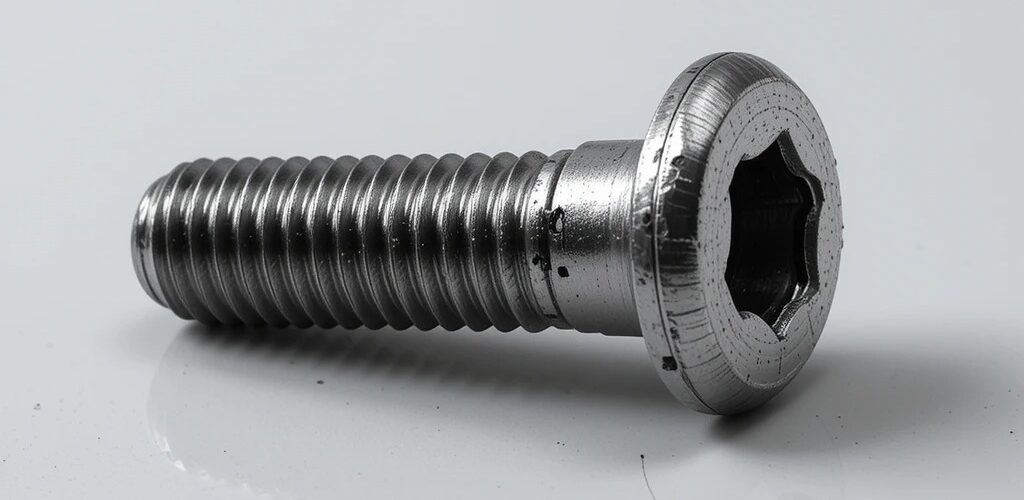
Coarse Thread Series, UNC/UNRC: The coarse thread series UNC/UNRC is the most commonly used thread system used in the majority of screws, bolts, and nuts. It is used for producing threads in low strength materials such as cast iron, mild steel, and softer copper alloys, aluminum etc. The coarse thread is also used for rapid assembly or disassembly.
Fine Thread Series, UNF/UNRF: This is used for applications that require a higher tensile strength than the coarse thread series and where a thin wall is required.
Extra-Fine Thread Series, UNEF/UNREF: This is used when the length of engagement is smaller than the fine-thread series. It is also applicable in all applications where the fine thread can be used.
Unified Standard Series and Selected Combinations, Unified Standard Series: The preferred threads to be used are either the coarse thread series or the fine thread series described above. The fit of screws threads (class 2A/2B and class 3A/3B), as well as the allowances, max and min. major/minor, pitch diameters are described in this table for all the threads, including UNC, UNF, UNEF, UN, UNR series.
Fine Threads for Thin Wall Tubing in the 27 thread series are used for thin wall tubing in the ¼ to 1 inch nominal size. The minimum recommended length of thread is 1/3 of the nominal diameter + 5 threads (+ 0.185 inch). These are included in the Unified Standard Series.
Special Combinations: Thread data are tabulated for certain special combinations of diameter and pitch, with pitch diameter tolerances based on a thread engagement length of 9 x Pitch. The pitch diameter limits are applicable for a length of engagement of 5 to 15 times the pitch. (The length of thread on mating parts, however, may exceed the length of engagement by a large amount) These threads are designated by UNS and UNRS. These are included in the Unified Standard Series.
Large bore piping divided to 3 types
a- standard schedule(thickness 4.75mm to 9.53mm)
b- high schedule(thickness 9.54mm to 19mm)
c- critical schedule(thickness more than 19mm)
Each type different in the shape of welding groove